Loman house
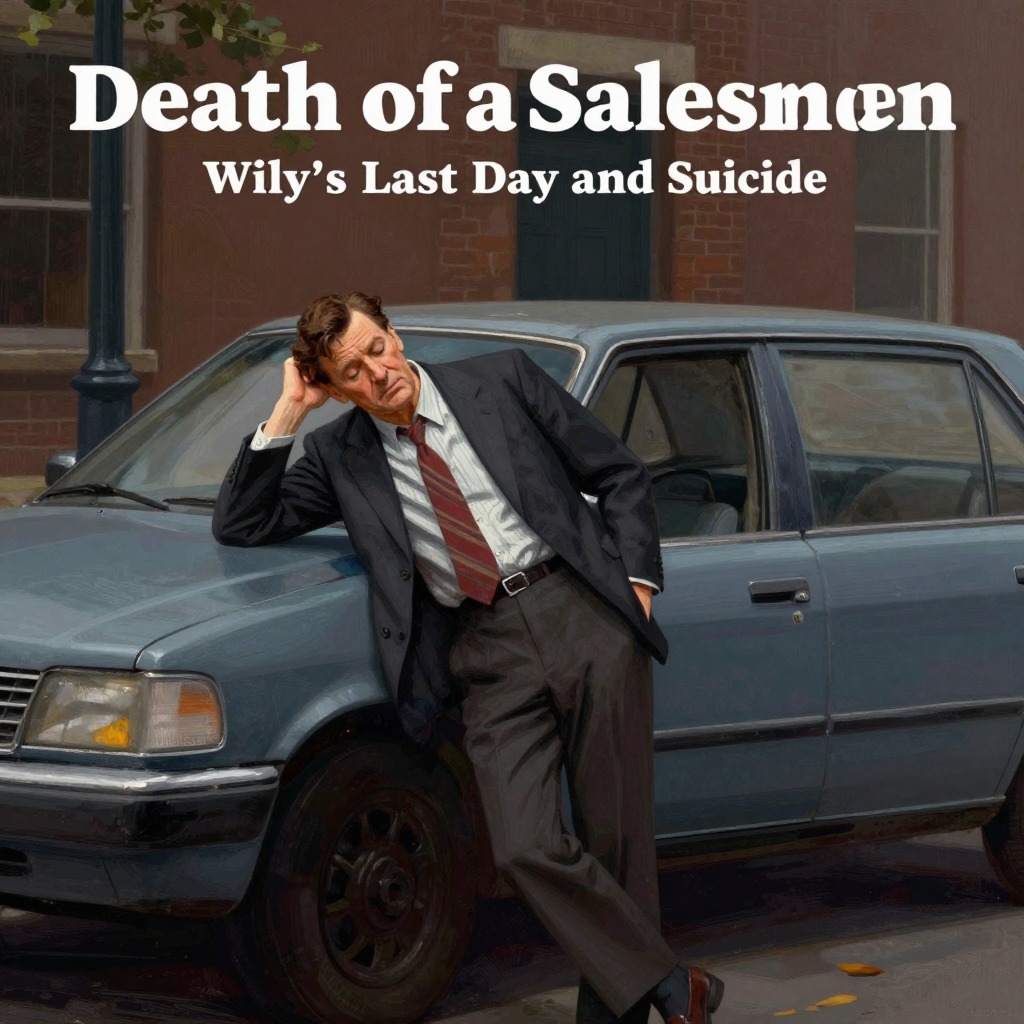
The Loman house is the physical and symbolic heart of Arthur Miller's Death of a Salesman, a small, fragile-seeming home that once represented hope and openness but has become a claustrophobic cage. The stage directions describe it as surrounded by "towering, angular shapes" and a "solid vault of apartment houses," with only a blue light of sky falling upon it, while the surrounding area shows an "angry glow of orange." The house itself is partially transparent, its roof-line one-dimensional, so that the apartment buildings are visible under and over it, visually trapping the home. The kitchen at center seems actual enough, with a table, three chairs, and a refrigerator, but no other fixtures are seen, and the entire setting clings to "an air of the dream," a dream rising out of reality. The house is not merely a backdrop but an active participant in Willy's psychological collapse, its walls and rooms dissolving as he slips into memory, with characters entering or leaving by stepping "through" a wall onto the forestage during scenes of the past.
The House as a Marker of Lost Promise and Entrapment
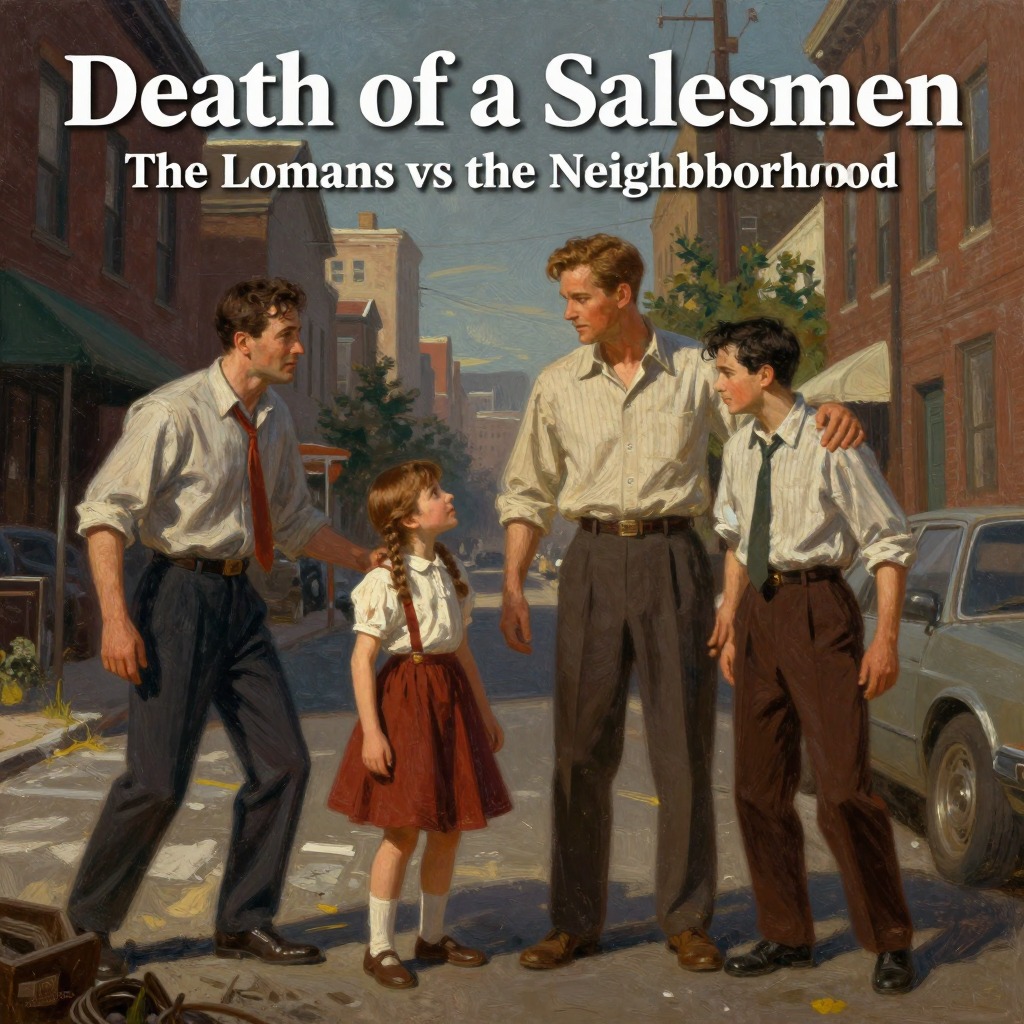
The house was once surrounded by open country, with two beautiful elm trees between which Willy and Biff hung a swing, and the neighborhood was fragrant with lilac, wisteria, and peonies. Willy recalls these days with longing, lamenting that "they massacred the neighborhood" and that "the grass don't grow any more, you can't raise a carrot in the back yard." The apartment houses have boxed them in, and Willy complains, "The street is lined with cars. There's not a breath of fresh air in the neighborhood." The house itself has become a financial burden that Willy has worked a lifetime to pay off, only to realize, "You finally own it, and there's nobody to live in it." The mortgage, a twenty-five-year commitment, is nearly paid off—Linda notes that after the next payment, "the house belongs to us"—but this achievement feels hollow, as Willy reflects that "some stranger'll come along, move in, and that's that." The house, once a symbol of stability and family, now stands as a monument to deferred dreams and the relentless pressure of a society that has moved past him.
The House as a Stage for Memory and Conflict
The house's structure mirrors the play's fluid time scheme, with the boys' bedroom raised six and a half feet behind the kitchen, and the parents' bedroom two feet above the kitchen level. This vertical arrangement allows for simultaneous action, as when Willy talks to himself in the kitchen while Biff and Happy listen from their beds above. The house becomes a stage for Willy's memories, which crash into his present, creating ironies and taunting him with a past that offers only reproach. The most devastating memory occurs in a Boston hotel room, not the Loman house, but the discovery of Willy's affair there shatters the family's home life forever. Back in Brooklyn, the house is the site of the climactic confrontation between Biff and Willy, where Biff forces Willy to see the rubber hose he has hidden for suicide, and where Biff finally breaks down, sobbing, and Willy realizes, "Biff—he likes me!" The house, in its final moments, becomes a place of both devastating truth and fragile reconciliation.
The House as a Symbol of Willy's Identity and Failure
Willy has poured his labor into the house, rebuilding the front stoop, putting up a ceiling in the living-room, finishing the cellar, and building an extra bathroom and a garage. Charley observes that "there's more of him in that front stoop than in all the sales he ever made," and Biff echoes that "he was a happy man with a batch of cement." Yet this manual work, which gives Willy genuine satisfaction, is not valued by the society he worships. The house, which he has maintained with his own hands, cannot compensate for his failure as a salesman. In the play's final image, the hard towers of the apartment buildings rise into sharp focus over the house, as the flute music fades, leaving the Loman home dwarfed and insignificant. The house, which was meant to be a testament to Willy's success, becomes instead a monument to his delusion and the crushing weight of the American Dream.